
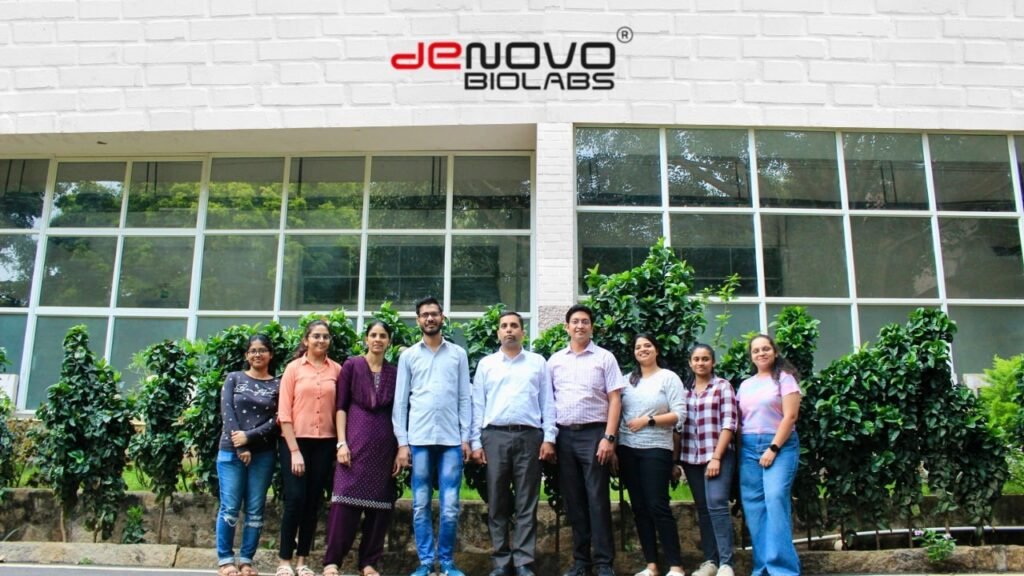
The Human Side of Reliable Science
Reliable science is often described like it is a property of reagents, instruments, and protocols.
In reality, reliability is also a human outcome.
It is built through disciplined habits, careful documentation, peer review and the quiet decisions made at the bench—day after day.
At deNOVO Biolabs, our work supports R&D, large-molecule drug development, biosimilar programs, and human diagnostics.
Why the “human side” matters more?
Even in modern labs, a significant portion of preventable quality issues come from process gaps, handoffs, and small deviations.
In laboratory diagnostics, pre-analytical errors have been reported to account for up to 70% of total mistakes—often driven by handling, identification, transport, and preparation steps. (PMC)
Meanwhile, in preclinical research, analyses have suggested irreproducibility exceeding 50%, with major downstream cost and time implications. (PMC)
So when clients ask, “Can you deliver lot-to-lot consistency?” they are not only asking about your instruments.
They are asking whether your team runs a system that stays stable when reality gets messy.
What “reliable” looks like in our lab culture?
1) Work that is designed to be repeated (not only completed)
A method can be technically correct and still fail in the real world.
So, our workflows are built to be repeatable by design:
- Parameters are defined, not implied.
- Acceptance criteria are documented early.
- Controls are treated as non-negotiable, not optional.
As a result, decisions are made with traceability in mind—not convenience.
2) Documentation that protects your outcomes
In regulated and diagnostic-adjacent contexts, documentation is not bureaucracy.
It is risk management.
When documentation is done properly, the same result can be explained, defended, and reproduced—months later, by someone else.
3) Peer checks that reduce “single-operator dependency”
In many labs, quality is unknowingly attached to one “best” person.
That can be fragile.
Instead, we prioritize cross-checks and internal review habits so that quality remains consistent even when teams rotate, timelines compress, or scale increases.
4) Controls that are treated like a product, not an afterthought
Controls are where reliability is proven.
They are also where weak practices get exposed.
So, controls are planned upfront and reviewed routinely—because strong control discipline is one of the simplest predictors of strong downstream performance.
The team behind deNOVO’s diagnostic-aligned outputs
When you work with deNOVO, you are not only buying a reagent.
You are accessing a team that understands what happens after the lab step:
- Assay development constraints
- Sensitivity/specificity trade-offs
- Lot transitions and scale-up realities
- The cost of rework when a reagent behaves differently in the field
This is especially relevant for products like validated monoclonal antibody pairs for Dengue NS1 and HBsAg, where reliability must hold in real sample conditions and practical workflows.
It is also why we emphasize quality controls aimed at consistency “from the first lot to the millionth,” particularly when moving from R&D thinking to manufacturing discipline.
What you can expect when working with us?
Clear communication
You will not be left inferring what was done.
Expect clear deliverables, defined assumptions, and direct explanations of trade-offs.
Reliability
If you are building toward diagnostics, validation, or repeat procurement, you need fewer surprises.
Our operating mindset is designed for that reality.
A partner
Reliability is not only about accuracy.
It is also about avoiding rework, repeated optimization cycles, and stalled timelines—especially in long-cycle biotech and diagnostics programs. (PMC)
Who this is for?
If you are a:
- Diagnostic manufacturer building consistent assay performance
- Biotech team tired of variability across lots or vendors
- CRO / R&D group that needs reagents that behave predictably
- Program lead trying to reduce rework and compress timelines
…then the “human side of reliability” is not a soft story.
It is the difference between progress and repeat troubleshooting. (PMC)
Talk to the team
If you want to evaluate deNOVO for your program, reach out with:
- Your target and intended assay format
- Sensitivity requirements and sample type
- Expected scale (R&D vs manufacturing)
- Any existing performance constraints
We will respond with the most practical next step—whether that is a fit assessment, a short technical call, or relevant product guidance.
You can contact us via info@denovobiolabs.com or +91 80 29575711.